Intersectionality


Intersectionality is a term coined by Kimberlé Crenshaw—a legal scholar who leads the African American Policy Forum—to help us thinking about the ways that Black women were “impacted by multiple forces” (i.e. systemic racism and sexism) and then “abandoned to fend for [ourselves]” without access to language, legal recourse, or social movements that could hold or address the unique ways that we are marginalized by multiple, intersecting forms of oppression. Her scholarship highlights the ways that racism is often imagined to be something that primarily impacts Black men, and Black men are held up as the leaders of racial justice movements, while patriarchy is imagined to be something that primarily impacts white women (and white trans people), and white people are held up as the leaders of gender justice movements. In this framework, the experiences and leadership of Black women (and Black trans people) in racial and gender justice movements are erased.
In the field of early childhood, one clear example of this dynamic is the way that Black girls’ experiences regarding exclusionary discipline and the school-to-prison nexus are often ignored. Conversations about racism and suspensions focus solely on Black boys, as if they are the only group of children impacted by this problem, and rarely acknowledge the different, but also significant, forms of marginalization that Black girls are experiencing in the same settings.


Over the years, this concept has been applied to more intersections, helping to shift our understanding about the nature of privilege and oppression. We now have a framework to describe the longstanding experiences of groups who are multiply marginalized, and a commitment to an intersectional approach is core to any form of critical race feminism. In movement spaces, we often talk about this in terms of a commitment to “collective liberation.” The idea that:
“There is no thing as a single-issue struggle because we do not live single-issue lives.”
―Audre Lorde
One of the ways that this commitment is evident throughout the First Conversations series is through the illustrations. This is important to me because the target audience for these books are pre-readers. They’re paying attention to the pictures even more than the words. What I aim to make clear is that intersectionality is deeper than the fact that the series addresses multiple topics (race, class, gender, sexuality, disability, etc.). It’s evident in the fact that the characters hold multifaceted identities, and navigate this complexity in their world and in their relationships.
Here’s one example. The main character from Our Skin is often assumed to be a boy. As such, the white girl always made them play the “bad guy,” which is an example of racism. In Yes! No! (the third book in the series) that same character perpetuates ableism by touching a friend’s wheelchair without consent.
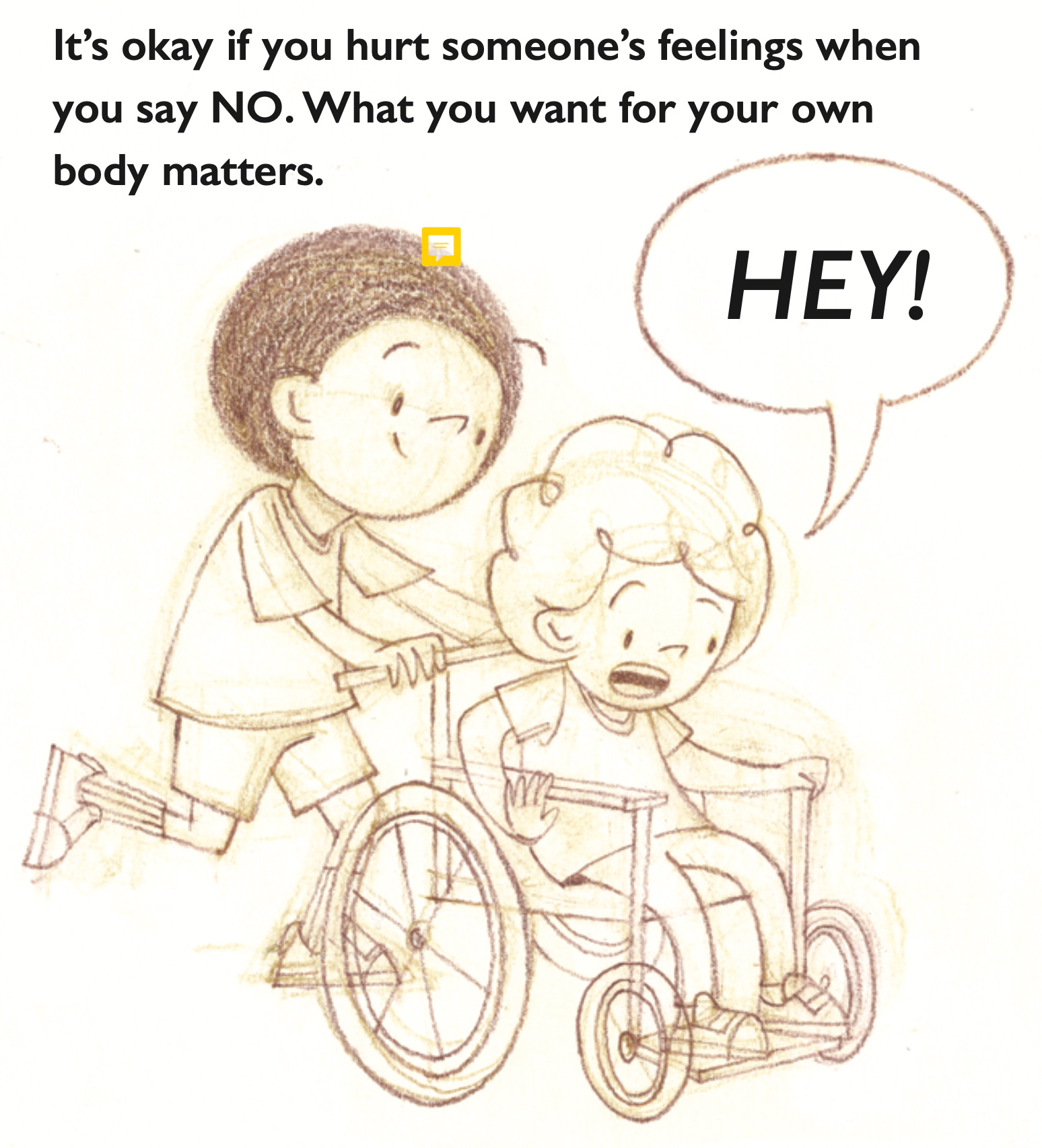
They are not one thing—victim or perpetrator, Black or able-bodied. Like all of us, they are a member of multiple social groups, some of which are advantaged and some that are marginalized. What Jonathan captured so beautifully in the final book is the practice of relationship and solidarity across difference. Through the praxis of intersectionality, these characters grow over time, learning from their mistakes and moving from victim of racist microaggression, to perpetrator of ableist microaggression, to Black superhero; from bystander, to victim, to Disabled princess. Over time, they both learn to help one another when and how they need it, and their friendship is strengthened through the process.
Each book in the series was more work than my entire dissertation. But because of the format, it’s been difficult to get my fellow academics to recognize First Conversations as works of scholarship. So one cool thing I figured out this week is that the books are beginning to be cited in peer-reviewed journal articles around the world! Here are some of the results from Google Scholar for Our Skin:
Importancia del álbum ilustrado como recurso para educar niños y niñas antirracistas (2023)
Teaching the history of scientific racism: A critical imperative for anti-racist pedagogy (2025)
I’m particularly fascinated by this anti-CRT master’s thesis from Liberty University! Anyways, one of the things we can all do to more deeply integrate an intersectional approach into our racial justice work is to #CiteBlackWomen. Cite Kimberlé Crenshaw and cite Dr. Megan Pamela Ruth Madison. Thanks :)
Life updates:
I’m living in the big city for the month of December. Graie and I are sharing an apartment in Montevideo and with our combined income we can afford a place that’s much bigger and has a washing machine and a stove in unit, which helps save money, but decreases my opportunities to leave the house, practice Spanish or interact with other people, and that has an impact on my mental health. I’m going to try making challah this week and I’m getting pretty good at making empanadas. I miss the water, but the neighborhood is lovely with lots of big trees. One day, when I have money to spend, I look forward to visiting the bookstore, yoga studio, and lots of restaurants just around the corner.
The baby nibling is doing okay. He spent Thanksgiving in the hospital undergoing his second round of chemotherapy, but he’s hanging in there.
kt, Debbie and Jupiter are building a beautiful life in Harlem.
My nibling Kalen—who recently moved to Brussels with my older sister, brother-in-law, and twin—starred in a a high school production of Les Miserables!
The RECE conference is happening in Santiago, but I’m not there. I didn’t sign up in time. For anyone who did go, it’d love to find some time to debrief and hear all about what I missed.
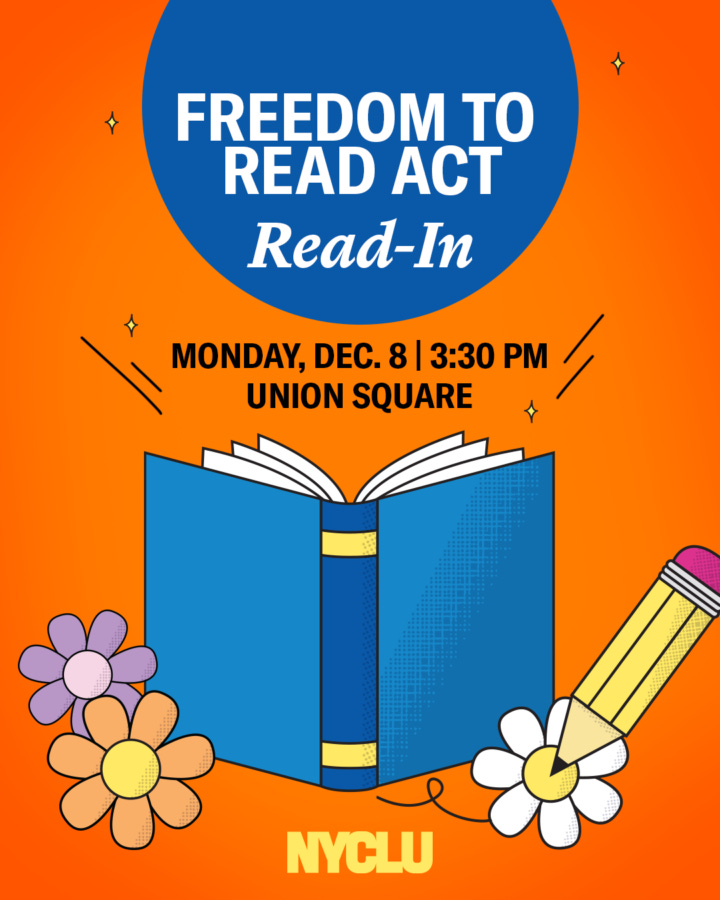
For folks who aren’t able to make it to Albany on December 8th, there will be another action that same day in Union Square. It would mean the world to me for my community to show up and support. Bring a copy of your favorite First Conversation and send me a photo that I can post on social media and include in upcoming grant applications to demonstrate our connection to social movements.
Job updates:
I’ve been scheduling informational interviews with people and really disliking the experience. People are nice, but I’m still pretty Zoomed out since COVID, so they take a lot out of me and have not really led to any positive outcomes career-wise. I’ll keep doing it because “research says” they’re supposed to be a good thing to do or whatever, but I just want it on the record that I don’t like it and I don’t think they’re helping me.
Submitted another grant application and got quickly rejected. I feel proud of the ways that I’m not giving up and not taking the all the rejection too personally. The hardest part is not knowing where or how I’m gonna live unless something comes through. I grew up without stable housing, so living out of a suitcase a familiar experience; but whether you’re a kid or a grown-up, being homeless is always very stressful.
Submitted a few RFPs for contract work that I don’t feel excited about, but a girl’s gotta eat. Compared to previous years, the pay rate is so low!
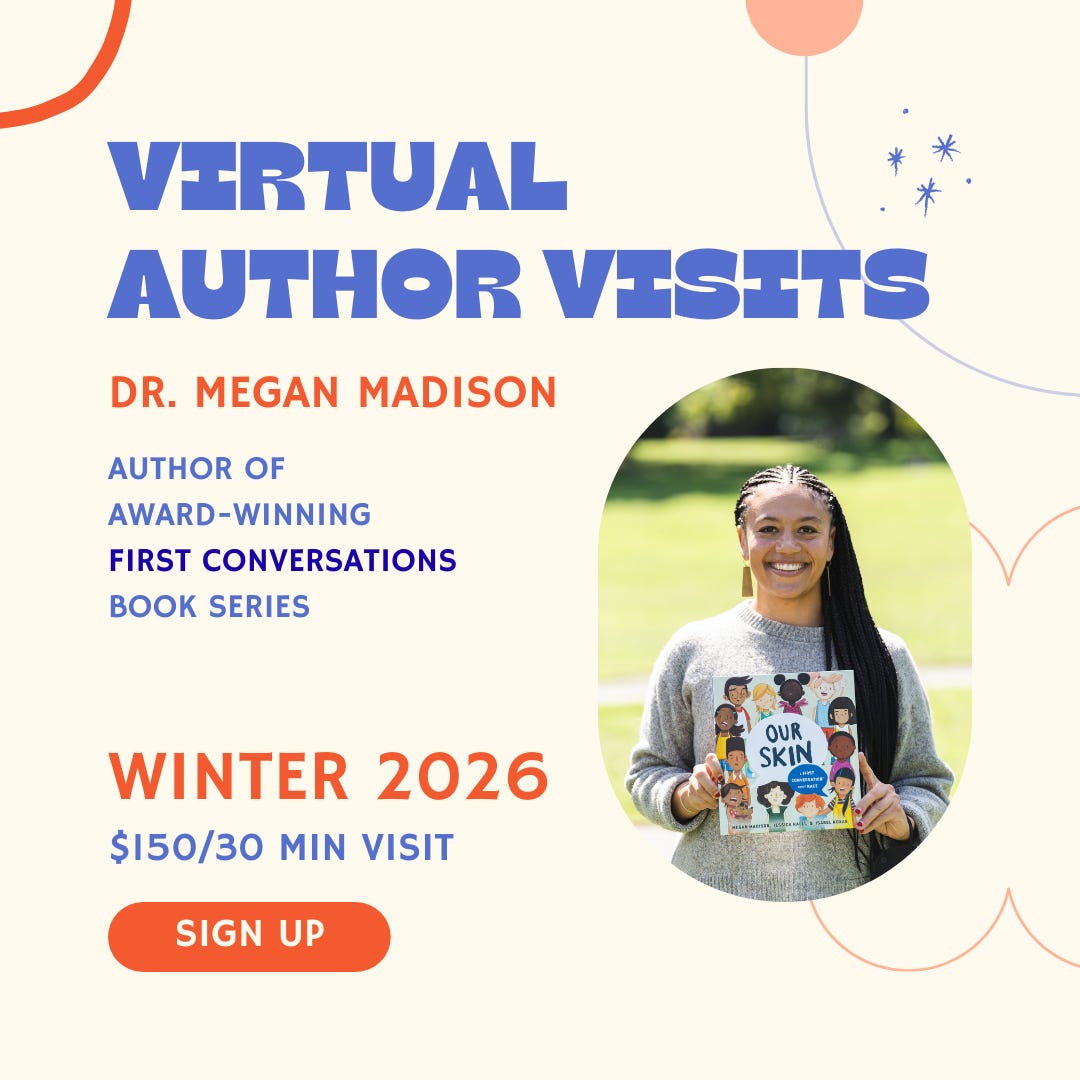
I was not able to raise enough money via Substack to afford a Spanish class, but I haven’t lost sight of this goal, so I’m going to try another way. I’ll be offering virtual author visits throughout January and February, so if you know any teachers or librarians who might be interested, please help me spread the word. They can sign-up here.
What I’ve been watching/reading/listening to:
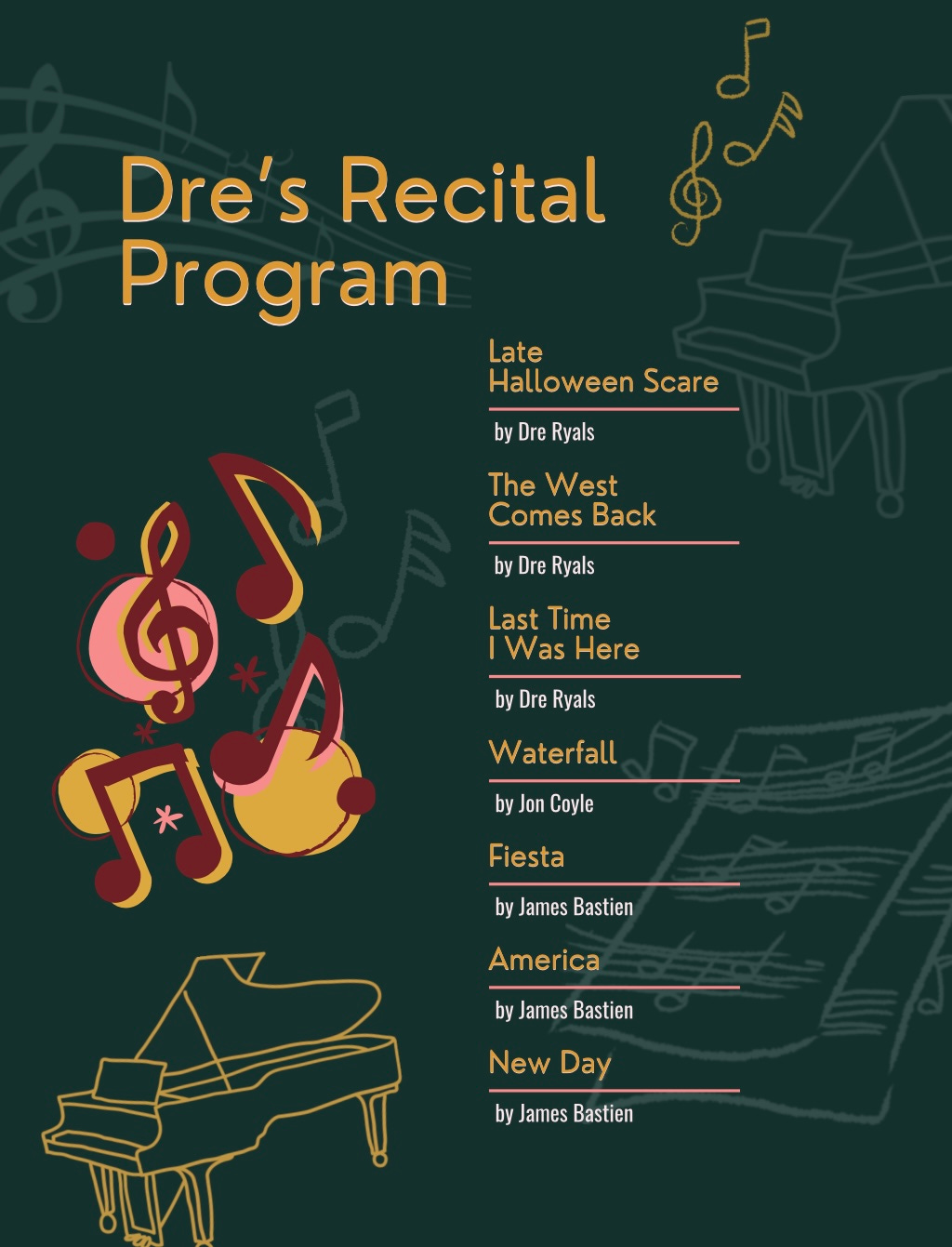
Dre’s piano recital was incredible! They performed several of their own compositions and it was an absolute joy!! I loved every song, but my favorite piece was “The West Comes Back.”
Elah’s partner created a powerful one-woman-show about Falasteen called Salma.
The Best Toddler Books to Get Kids Started on a Lifetime of Reading from Parents Magazine
Public Opinion is Meaningless Against Trump - Public Action is What Matters by Anat Shenker-Osorio
Detainees at ‘Alligator Alcatraz’ facing ‘harrowing human right violations’, new report alleges from The Guardian